Your first lesson about the insiders...
I first learned about the importance of the Commitments of Traders Reports from Bill Meehan. Bill had been a member of the Chicago Board of Trade, and in 1969 revealed the basic secrets of these reports to me. Along the way, I invented some ways to make it easier to see the impact of these guys by making mechanical indicators with the data. I've been using them for over 40 years now and think you'll find them to be invaluable tools.

What the COT Report tells you
- The report is published weekly, Friday evenings by the Commodity Futures Trading Commission. The report breaks down the amount of buying and selling done by three groups: Commercials, Non-Commercials, and Non-Reportables.
- The largest powers in the marketplace are the Commercials. These are the large users and producers of the commodity. They do not use the commodity markets to speculate or directly make money in the markets. They are producers and users of the commodity. So they sell forward or hedge their production/demand. They use the markets for selling and delivery, not speculating.
- There are the Non-Reportables, probably people like you…people who are trading in smaller amounts; the average trader. Interestingly enough, sometimes their record is very good in specific markets, but usually they are wrong.
- Each week we find out exactly what the big guys have been doing in the marketplace... but it's not quite that easy.
- The Non-Commercials are the second most dominant figure in the report. These are not quite what you think. They're not just large traders like me.
How to Use the COT Report
The COT Index Explained
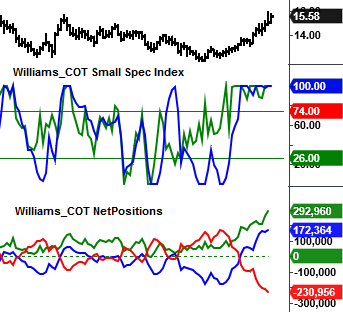
Study this much and you'll run across something called the COT Index or Commercials Index. Most of the followers of the Commitments of Traders Reports now use this index...it's something I created and began using in 1970s. That's why I think it's fair to say I've been using this data longer than anyone else out there.
In a recent presentation I did with eSignal, I explain in detail how I use the Commercials Index, along with my other COT indicators. (In my courses, I obviously go into much more depth). Watch this presentation below.

How To Use This Information
Despite what you may have read from other traders (people who only looked at it for a few years), it is not a black-and-white situation. Just because the Commercials, the largest players in the marketplace, have been buyers does not mean a market will rally. How can that be true?
Let’s say you are a Commercial in Sugar. You need sugar to make candy. If the price of Sugar goes down; you will buy Sugar. In fact, the more it declines, the more sugar you will buy in the futures markets now, for delivery later on when you will be making candy.
Your main concern is how much the sugar in your candy costs. As a Commercial you don’t care much about what price will do…no…you care about buying so you can take delivery and whip of a bunch of taffy to sell for a profit.
Not Mystical Mumbo Jumbo
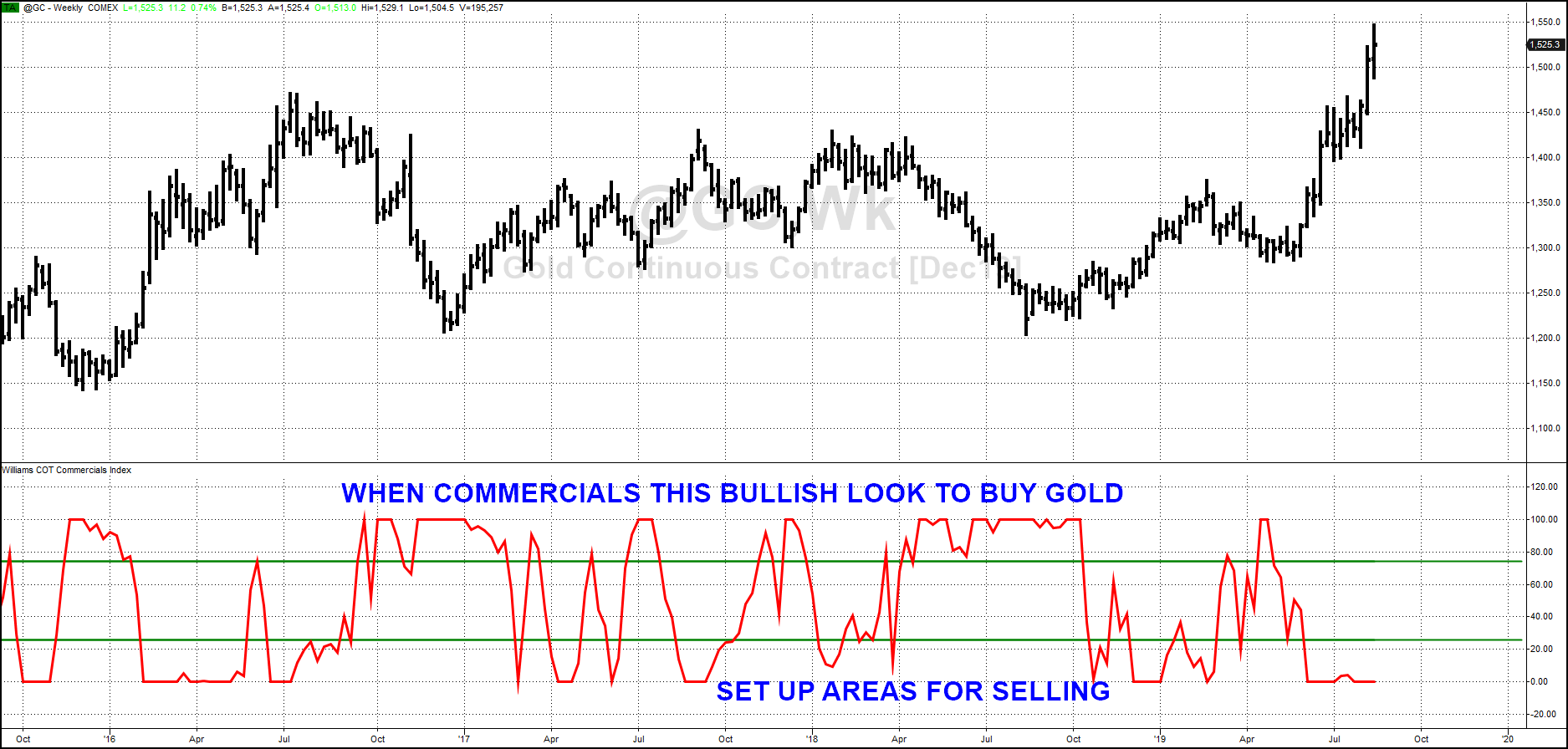
Using the COT index is not about chart reading or any of the mystical stuff called technical analysis. It's plain and simple, as you can see in the chart of Gold --- when the red line is high and above 80% --- the Commercials have been doing a relatively large amount of buying, and prices usually rally. By the same token, when the line is low --- below 20% --- they have been doing a relatively large amount of selling and prices usually decline. Look at the $ potential in those moves! Of course, not all indicators will make money and there is always risk; you can lose as much or more than you can make on a trade.
Is this the type of indicator you are looking for to help your trading and investment decisions? You can learn more about how to use this indicator through my free mini trading course in the Larry Williams University, "How to Get Started Trading Commodities".